E-Commerce UX Study
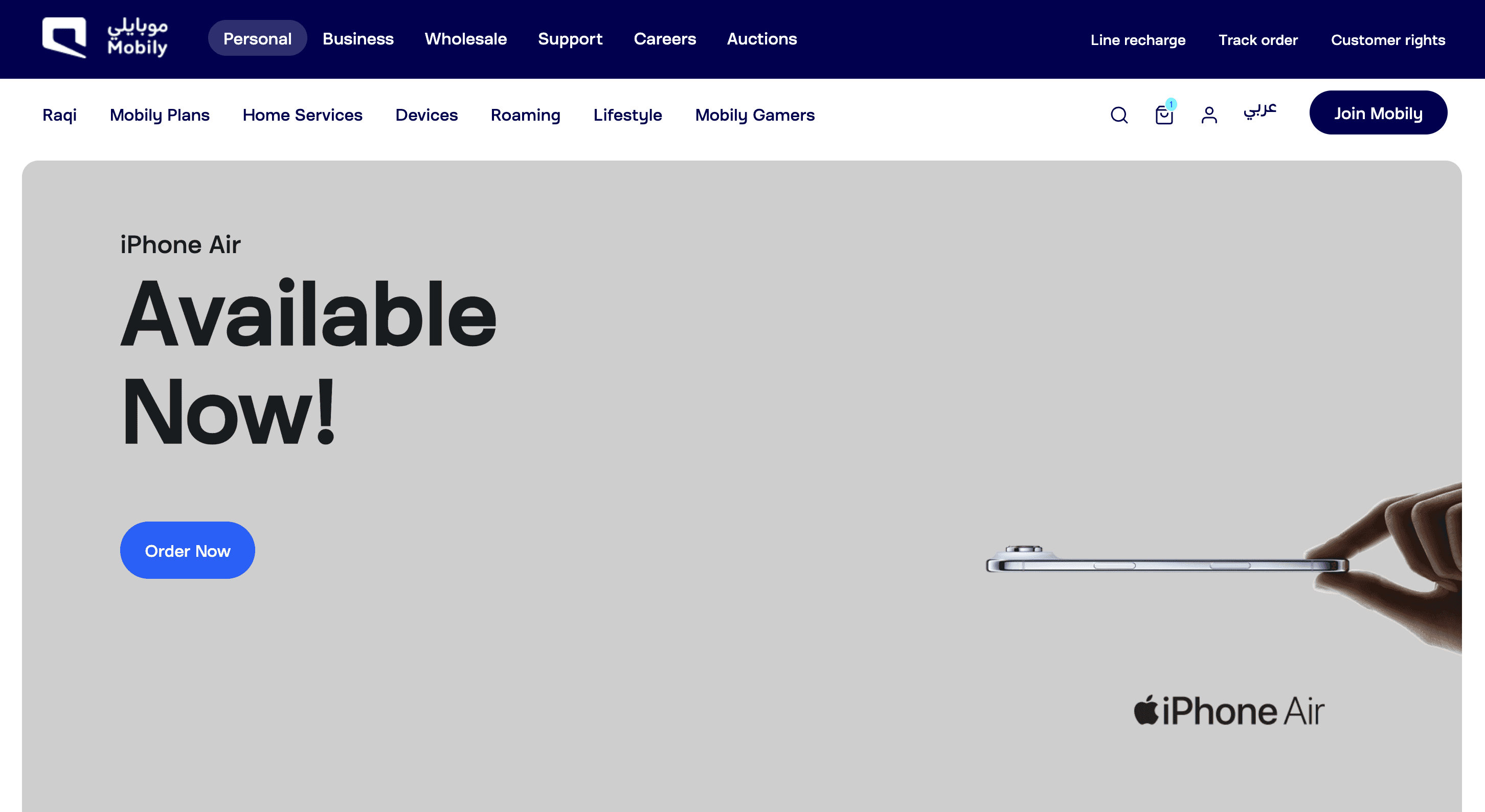
During my UX Design internship at Mobily, one of Saudi Arabia’s leading telecommunications companies, I joined the Customer Experience team to evaluate and enhance the e-commerce experience of the Mobily website. Working under the mentorship of the Director of Customer Experience, I worked independently to identify usability pain points and propose design improvements.
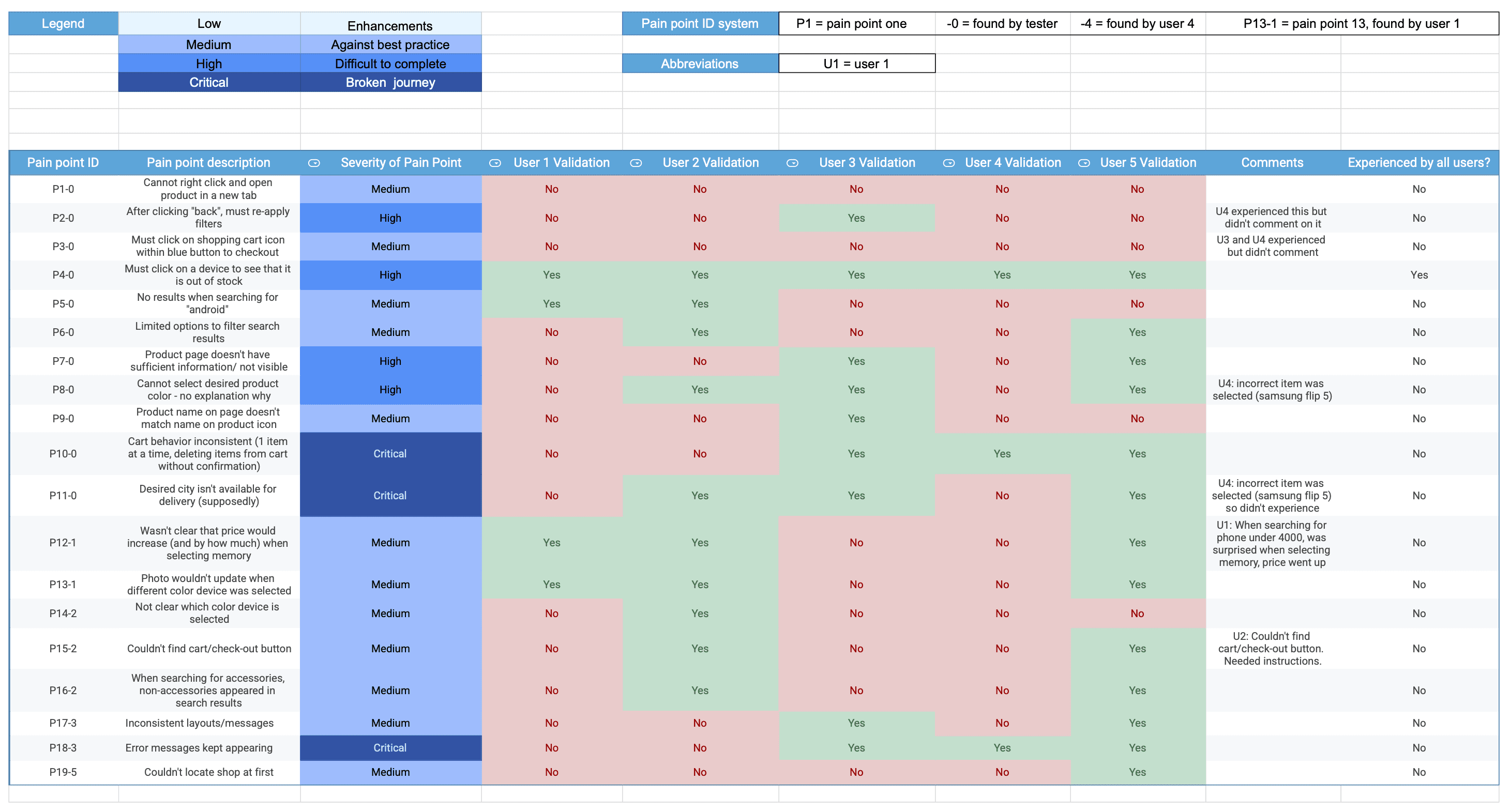
My responsibilities included conducting user interviews and usability testing, creating user journey maps and personas, and designing a data tracking system on Google Sheets to synthesize interview insights efficiently.
Goal
Identify the most critical usability barriers on the Mobily website from a user-centered perspective, and communicate these insights effectively to stakeholders in a way that could guide redesign decisions.
Project context & challenges
This was my first formal UX project, and I completed the internship entirely remotely. Because of the time difference, I met and coordinated with the Director during late-night hours in Seattle (10 PM–3 AM), which required careful planning and flexibility.
As a non-employee, I didn’t have access to several internal tools and resources. That limitation ultimately became an opportunity: I created a custom interview-tracking system to support my research workflow. The Director ended up preferring it to their existing method and adopted it for the team moving forward.
Process
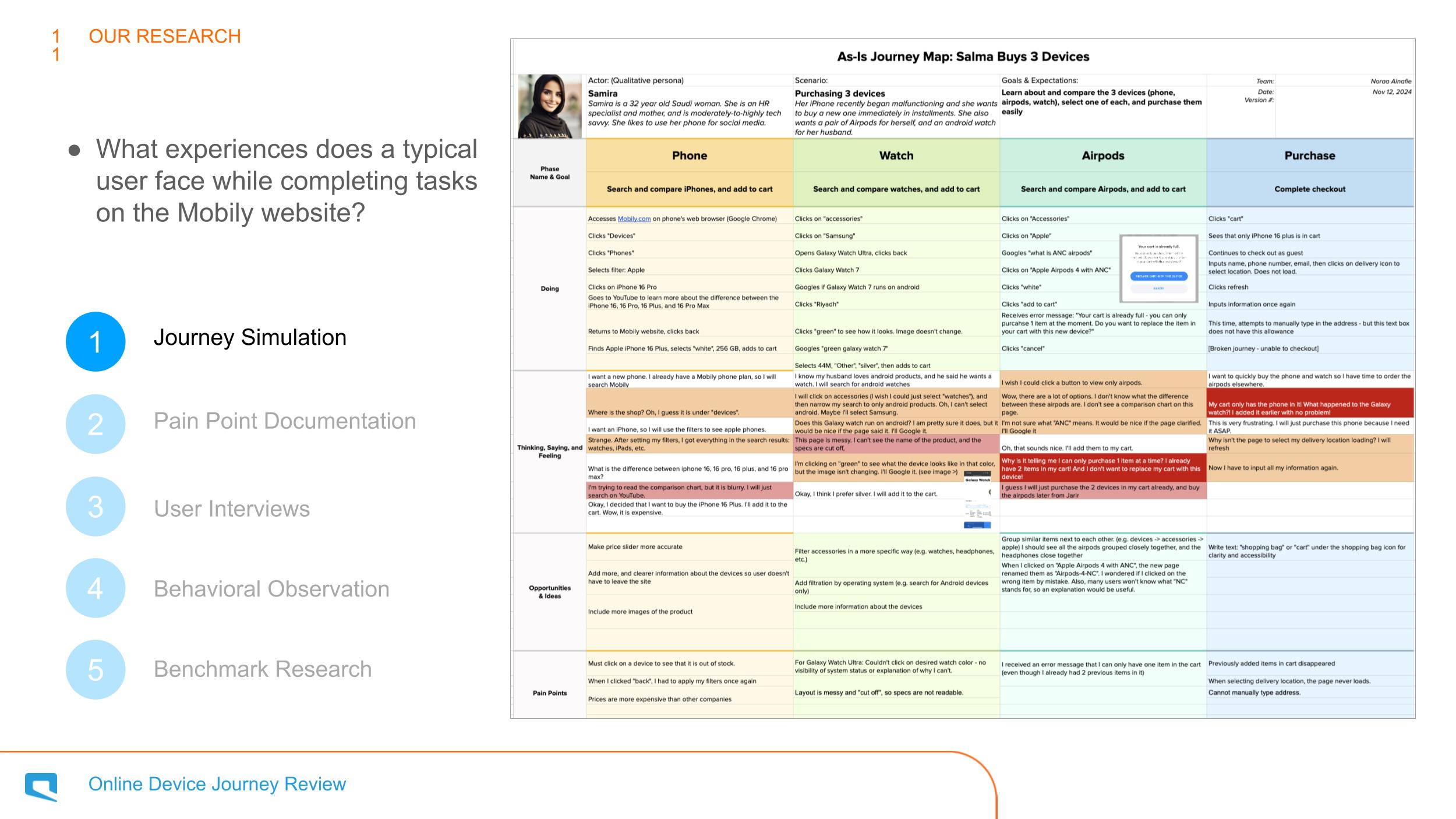
1. Journey Simulation
I began by walking through the full online purchase flow myself—from product discovery to checkout—to surface immediate friction points. This initial simulation helped me map the core paths users were expected to take and identify early hypotheses about where breakdowns were occurring.
2. Pain Point Documentation
Next, I systematically documented each usability issue encountered during the simulation. I categorized problems by severity, location in the flow, and potential business impact (e.g., likelihood of causing drop-offs). This helped create a preliminary, evidence-backed view of the platform’s most vulnerable touchpoints.
3. User Interviews
To validate and deepen these findings, I conducted qualitative interviews with users to understand how they search, evaluate, and purchase tech devices. I explored factors such as buying habits, decision criteria, and trust in carrier websites. Their responses were coded and grouped into themes to highlight recurring frustrations and expectations.
4. Behavioral Observation / Usability Study
Participants were then asked to complete tasks on the Mobily website while thinking aloud. I observed real-time behaviors, including hesitations, misclicks, and backtracking. These observations provided actionable data points that either reinforced or challenged our earlier assumptions.
5. Benchmark Research
Finally, I conducted a competitive benchmark analysis, comparing Mobily’s flows with industry standards and top-performing competitors. This step quantified how Mobily’s user experience differed in areas such as navigation clarity, product information density, and checkout efficiency.
Creating a Structured Analysis System
Because I was not given a formal way to organize qualitative findings, I designed and implemented a new interview-tracking and coding system. This framework made it easier to log, categorize, and analyze user responses across sessions. It was later adopted by the Director for ongoing UX research due to its clarity and usability.
Outcome
I delivered a comprehensive research report and design recommendations highlighting key friction points in navigation, information hierarchy, and checkout clarity.
I also developed and implemented a custom system for tracking and evaluating interview data, which streamlined synthesis and helped the team quickly surface recurring user pain points.
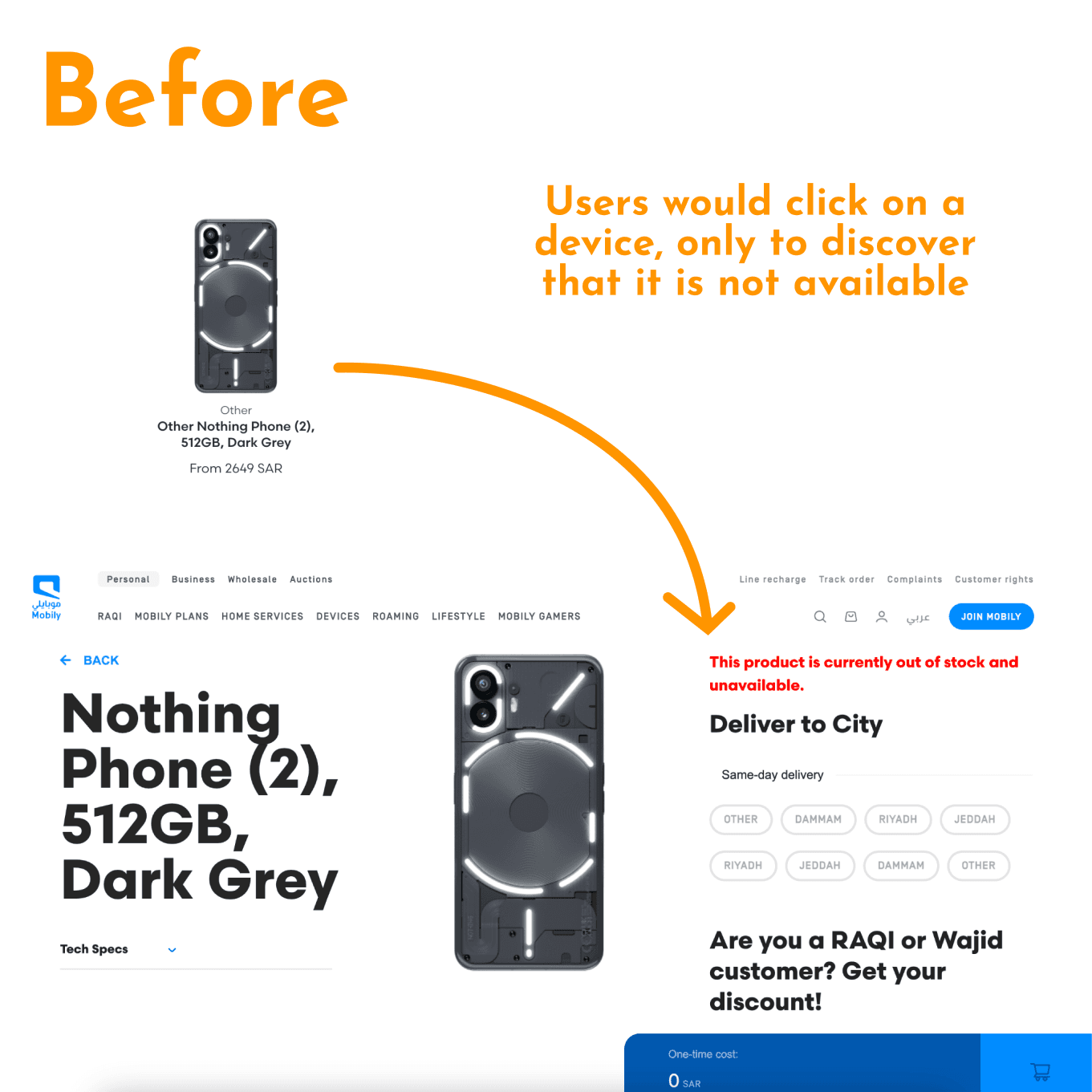
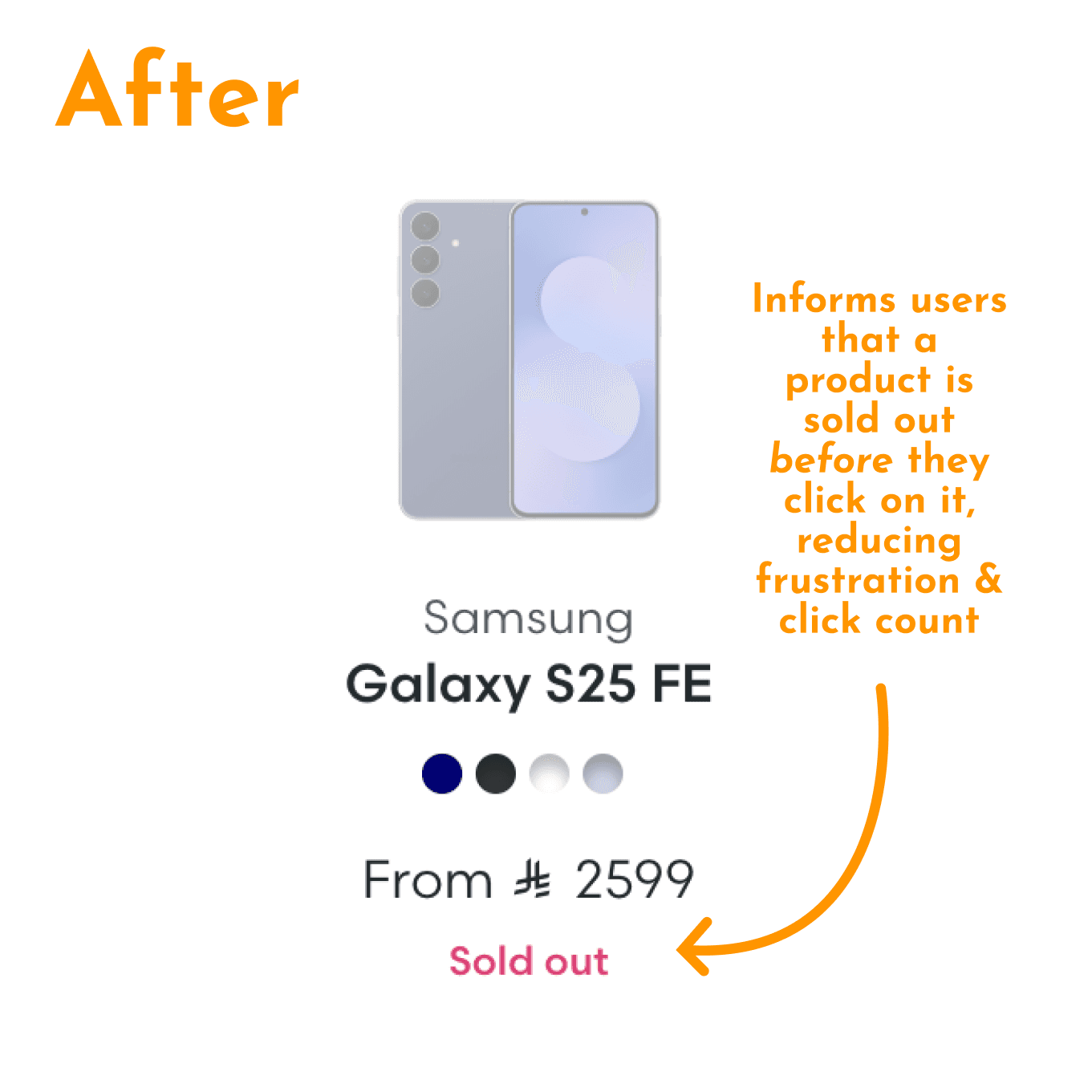
I presented my insights to the Customer Experience team and stakeholders, and I recently noticed that several of my proposed changes have been implemented on the live Mobily website (transparency about sold out products on the search page + removing a confusing "delivery city" section on product pages).
From this project I learned…
The importance of data-driven personas.
How to conduct user interviews and usability studies.
The value of clear documentation and information synthesis.
How to communicate findings to stakeholders.
How to bridge research insights with actionable design opportunities in a corporate setting.
Impact
Clarified the end-to-end device-purchase journey, giving the team a unified understanding of real user pain points.
Validated assumptions through user interviews, uncovering issues that were previously unseen or only vaguely defined.
Enabled the design team to prioritize improvements with greater confidence and focus.
Provided research documentation that can be reused for future design decisions and team alignment.
Positioned Mobily to reduce user frustration and improve clarity in the purchasing flow in upcoming redesign iterations - leading to increased customer satisfaction, reduced support call volume, and higher conversion rates.